This article is written for importers, waterproofing contractors, and procurement engineers who search for bituthene 3000 and need to specify or source a comparable self-adhesive membrane for underground or below-grade work. It helps you understand what buyers usually mean by this keyword, how to match the requirement to an available product type, and what details to confirm before requesting a quotation.
Bituthene 3000 is widely known as a cold-applied, self-adhesive membrane used in below-grade waterproofing. When buyers use this term in an inquiry, they are often describing a product category and an application method rather than a single fixed item. Understanding that distinction helps you avoid ordering the wrong specification.
Buyer intent behind the keyword bituthene 3000
Most people searching for bituthene 3000 fall into a few groups. Some are matching a project specification that named the product directly and need an equivalent self-adhesive membrane. Others are contractors comparing cold-applied membrane options for basement waterproofing and want to understand how a self-adhesive membrane installs without open flame. A third group is procurement staff building a bill of materials and checking what to confirm before they ask for pricing.
In practice, the intent usually points to a self-adhesive or pre-applied bitumen membrane for foundations, retaining walls, and slabs. The correct choice depends on whether the concrete is poured before or after the membrane is placed, the climate at the destination, and the local specification. Confirm these points early so the quotation reflects the real requirement.
Common application scenarios
Self-adhesive and pre-applied membranes in this category are typically specified for below-grade and enclosed structures. Common uses include:
- Basement floor slabs and side walls, where cold application avoids flame risk in confined areas.
- Tunnels and municipal utility corridors that require continuous below-grade protection.
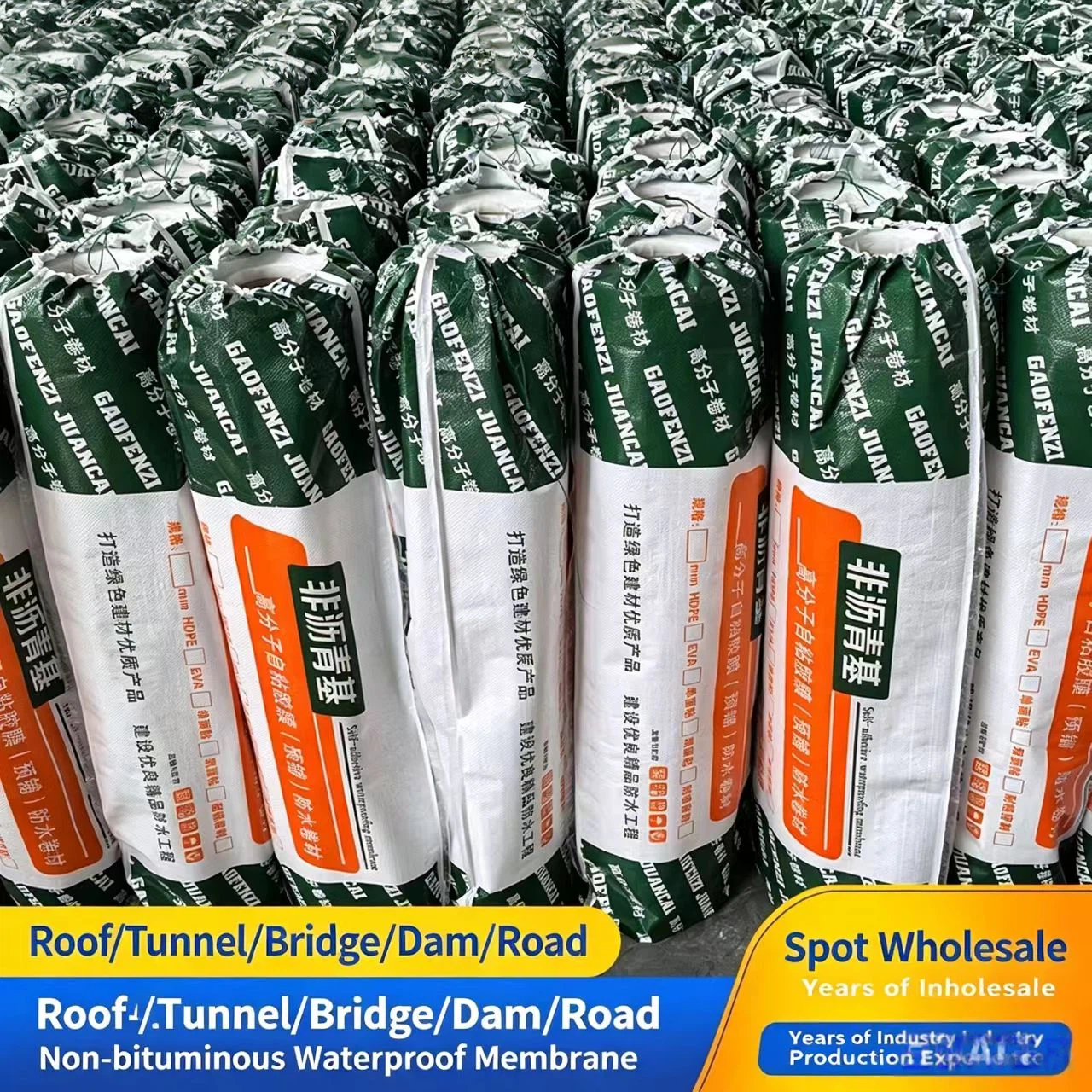
- Foundation raft slabs using pre-applied membrane, where fresh concrete is cast directly against the membrane.
- Retaining walls and podium decks that combine sheet membrane with detailing at joints and penetrations.
- Repair and renovation of existing below-grade areas, often combined with a non-curing or liquid product at seams.
For roofing waterproofing on exposed decks, an APP membrane, SBS membrane, PVC/TPO/EPDM membrane, or a waterproof coating is usually more suitable than a below-grade self-adhesive sheet. Match the product to the exposure and substrate rather than to the name alone.
Buyer decision table
| Project condition | Material option | What to confirm before inquiry | Notes |
|---|---|---|---|
| Foundation slab, concrete cast against membrane | Pre-applied anti-adhesive self-adhesive membrane | Sequence of pouring, slab area, substrate preparation | Designed to bond to fresh concrete; confirm the anti-adhesive type is required |
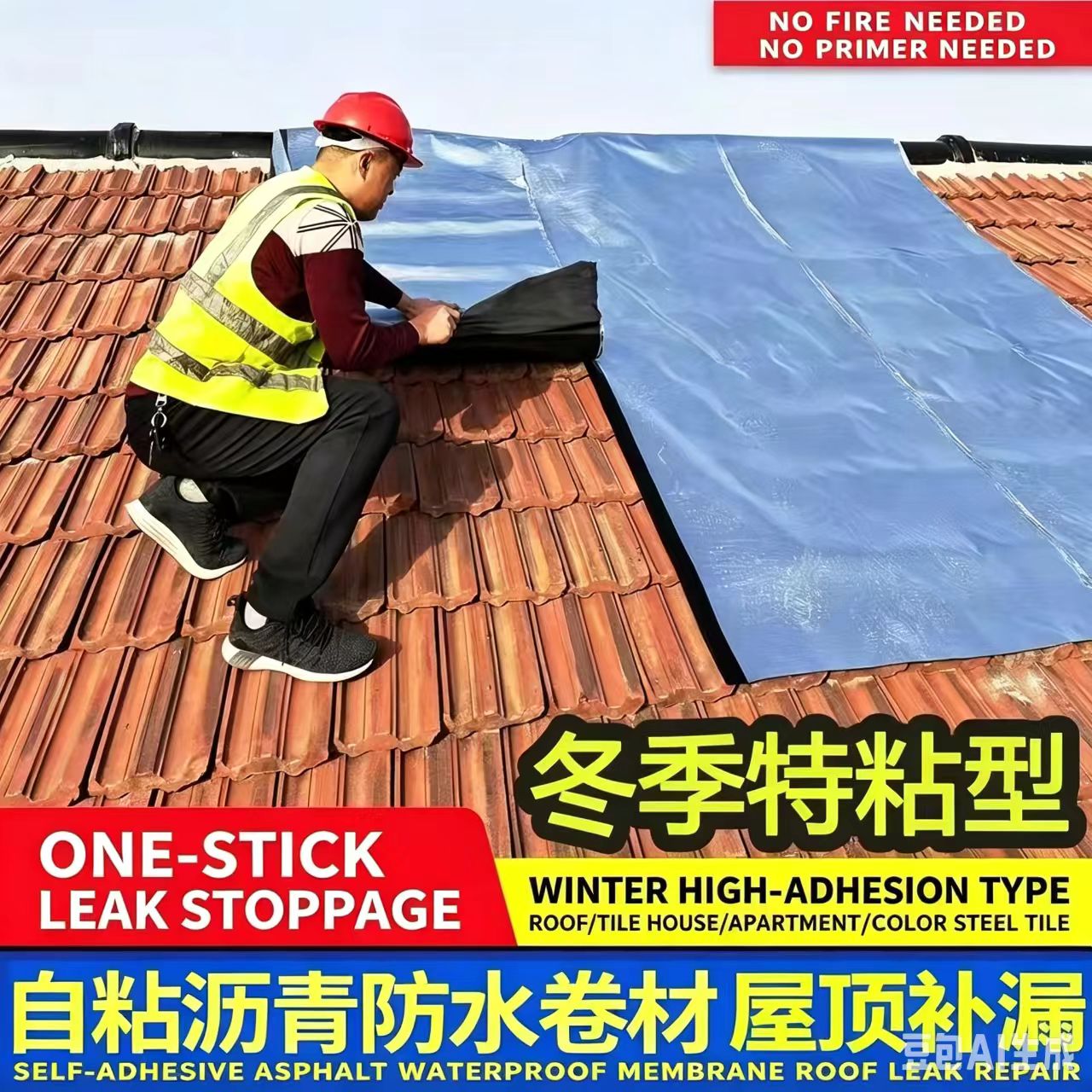
| Basement walls, cold application preferred | Self-adhesive modified bitumen membrane | Wall height, priming method, ambient temperature | Avoids open flame in enclosed areas |
| Cold climate below-grade or roofing | SBS modified bitumen membrane | Application method, exposure, thickness | SBS is common where low-temperature flexibility matters |
| Joint sealing and detailing at penetrations | Non-curing rubber asphalt coating | Linear meters, joint width, membrane it pairs with | Often used with sheet membrane, not as a standalone system |
How to choose specifications
Once the application is clear, the specification is defined by measurable details. For self-adhesive and pre-applied membranes, discuss the following with your supplier:
- Thickness: Confirm the required membrane thickness against the project specification and layer arrangement.
- Roll width and length: These affect coverage per roll, overlap waste, and container loading.
- Surface finish: Sand-faced, film-faced, or anti-adhesive coated surfaces suit different application methods.
- Reinforcement: Ask whether a polyester or composite carrier is needed for the intended use.
- Installation method: Cold self-adhesive, pre-applied, or torch-applied changes the product and the detailing accessories.
- Packing: Confirm rolls per pallet, protective packaging, and marking for the destination.
- Quantity and destination port: Total area and shipping port determine roll counts, packing, and freight planning.
Because the term bituthene 3000 refers to a known product line, avoid assuming any single item is an exact match. Share the original specification sheet so the supplier can propose a comparable membrane and note where thickness, surface, or method may differ.
Questions to prepare before requesting a quotation
- Is the membrane for a floor slab (pre-applied) or for walls (post-applied self-adhesive)?
- Will concrete be poured against the membrane, or is it applied to a cured surface?
- What total area and how many linear metres of detailing are involved?
- What thickness and roll dimensions does the specification require?
- What is the climate and typical temperature range at the installation site?
- Do you need matching primer, tape, or non-curing coating for joints?
- What is the destination port and preferred packing arrangement?
Common mistakes and selection risks
A frequent error is treating a below-grade self-adhesive membrane as interchangeable with an exposed roofing membrane. The exposure, UV resistance, and detailing requirements are different. Another risk is ordering a standard self-adhesive membrane when the project actually calls for a pre-applied anti-adhesive type, or the reverse; these are not interchangeable because they bond differently to concrete.
Buyers also sometimes overlook the accessories. A sheet membrane system usually needs compatible primer and joint treatment to perform as intended. Confirm the full material list, not only the main roll. Finally, do not finalise thickness or coverage from the product name alone. Confirm the numbers against the drawing, the substrate, and the local specification before you place an order.
Conclusion
If your project references bituthene 3000, start by identifying the application, the pouring sequence, and the climate, then match those to a suitable self-adhesive or pre-applied membrane. Share your specification and quantities, and our team can help you compare options, confirm the correct type, and prepare a clear quotation based on your actual project conditions.