This guide is written for contractors, procurement engineers, distributors, and project buyers who are comparing liquid membrane waterproofing products for roofs, basements, wet areas, and repair work. It focuses on the practical choices you face when specifying a coating and preparing an inquiry, rather than promoting a single product.
If you are deciding between a liquid-applied coating and a sheet membrane, or trying to match a coating to a specific substrate and climate, the sections below will help you narrow the options and communicate your requirements clearly to a supplier.
Understanding the buyer intent behind liquid membrane waterproofing
When buyers search for liquid membrane waterproofing, they usually want a coating that cures into a continuous film without laps or welds. This is attractive for irregular structures, detailing around penetrations, and surfaces where a sheet waterproof membrane is hard to lay flat. Common intents include finding a coating for a full roof or basement area, sourcing a product for joint reinforcement alongside a bitumen membrane, or locating a repair coating for an existing surface.
Liquid membranes cover several chemistries, including polyurethane, acrylic, polymer cement-based (JS), and rubber asphalt types. Each behaves differently on movement, UV exposure, and wet substrates. Clarifying which of these fits your project is the first step, because the same keyword can lead to very different material recommendations.
Common application scenarios
Liquid coatings are used across many project types. Matching the scenario to the right chemistry avoids specification mistakes later.
- Flat and detailed roofs: Continuous coatings suit parapets, upstands, and areas with many penetrations where a sheet membrane needs extra detailing.
- Basements and retaining walls: Cement-based and crystalline coatings are often specified for concrete structures, sometimes on both positive and negative sides.
- Kitchens, bathrooms, and balconies: Polymer cement-based and polyurethane coatings are common for wet-area waterproofing under tile.
- Repair and renovation: Liquid coatings can be applied over existing surfaces to address seepage, subject to substrate condition and adhesion testing.
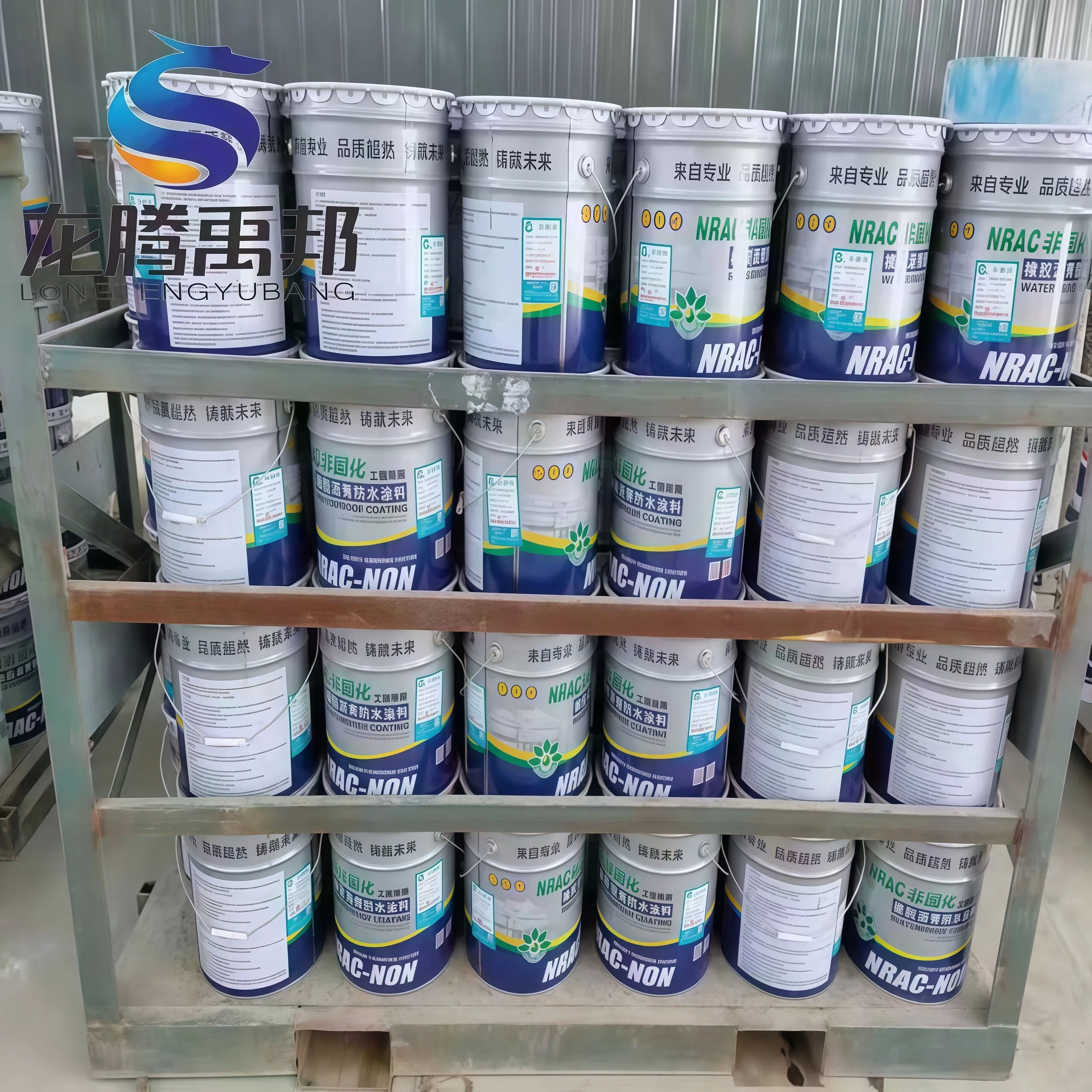
- Joint and reinforcement work: Non-curing rubber asphalt coatings are frequently used together with a bitumen membrane at seams and difficult details.
Buyer decision table
| Project condition | Material option | What to confirm before inquiry | Notes |
|---|---|---|---|
| Exposed roof with UV and movement | Polyurethane waterproof coating or acrylic elastic coating | Substrate type, climate, exposure, expected film thickness | UV and elongation behavior differ; confirm intended exposure conditions. |
| Concrete basement or pool | Polymer cement-based (JS) or crystalline coating | Positive or negative side, water pressure, substrate moisture | Cement-based types bond to damp concrete; verify application side. |
| Wet areas under tile | Polymer cement-based or polyurethane coating | Area size, tile adhesive compatibility, drying time | Coating must be compatible with the finishing system. |
| Joint sealing with a sheet system | Non-curing rubber asphalt coating | Which bitumen membrane it pairs with, joint width | Often used as a companion product, not a standalone film. |
| Old surface repair and seepage | Acrylic or silicone coating | Existing coating type, surface condition, adhesion | Surface preparation strongly affects results. |
How to choose specifications
Liquid coatings are not sold by roll dimensions like a self-adhesive membrane or APP/SBS membrane, so specification focuses on the coating system rather than sheet size. When comparing options, confirm the following where relevant:
- Chemistry and type: Single or double component, rigid or flexible, water-based or reactive.
- Applied film thickness: Coverage rate and number of coats depend on substrate and project requirements.
- Reinforcement: Whether a fabric or mesh layer is needed at joints and corners.
- Installation method: Brush, roller, or spray, and whether primer is required.
- Packing: Pail or drum size, units per pallet, and total quantity for the project.
- Destination and logistics: Destination port and climate during transit and storage.
For projects that combine a coating with a sheet system, also confirm compatibility with the chosen waterproof membrane, whether it is a bitumen membrane, PVC, TPO, or EPDM membrane.
Questions to prepare before requesting a quotation
- What is the substrate: concrete, metal, existing membrane, or tile base?
- Is the area exposed to UV, buried, or covered by a finish layer?
- What is the total area and required film thickness or coats?
- Is the application positive side or negative side, and what water pressure is expected?
- What installation method will be used on site, and is priming acceptable?
- What packing size and total quantity do you need, and what is the destination port?
- Will the coating work alone or alongside a sheet membrane for detailing?
Common mistakes and selection risks
The most frequent issue is choosing a coating by name alone without confirming the substrate and exposure. A product that performs well in a covered wet area may not be intended for permanent UV exposure, and a coating suited to damp concrete may differ from one made for dry surfaces. Another common risk is skipping reinforcement at movement joints and penetrations, where most leaks begin.
Buyers also underestimate surface preparation. Adhesion depends heavily on a clean, sound substrate, and results on old surfaces should be verified before large orders. Finally, ordering without confirming coverage rate can lead to shortages, because applied thickness and consumption vary by substrate texture and application method.
Conclusion
Liquid membrane waterproofing offers flexibility for complex details, repairs, and irregular structures, but the right choice depends on substrate, exposure, application method, and quantity. If you share your project conditions and destination requirements, our team can help you match a suitable coating or a combined coating and membrane system and prepare an accurate quotation.